A Guide To Building An Energy Efficient Home
Energy efficiency is using less energy to perform the same task
Benefit from eliminating energy waste, enjoy an eco-friendly comfortable life
and reduce your energy bills - forever
How Heat Enters And Escapes Australia's Homes
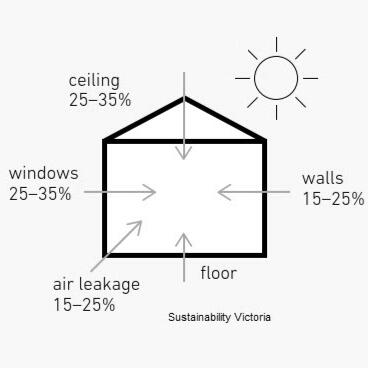
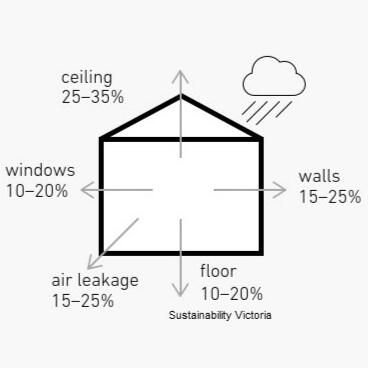
Many homeowners mistakenly believe they live in low energy, passive, and eco friendly homes. This belief arises because their homes tend to have ceiling/roof insulation, observe solar passive design principles such as living areas facing North, perhaps include a thin layer of insulation foil in the walls, and have energy-saving appliances and LED lights. Unfortunately, however, these homes in which most Australian's live, compare unfavourably with world-best-practice and are not low energy, passive, and eco friendly homes.Summer heat gain and winter heat loss illustrated below demonstrates heat transfer and air leakage as they occur in typical Australian homes. Building to Australian Standards, which is, by the way, a minimum requirement only, won't lead to energy efficient homes. Most homeowners, for example, would be surprised to discover that heat transfers via the floor of their homes in Winter, even though built to Australian Standards.Homes designed and constructed utilising an intelligent build methodology + high performance components will exceed Australian Standards for energy efficiency and sound transmission. Summer and Winter temperature extremes will be incapable of affecting the home's interior comfort level.
Summer Heat Gain
Winter Heat Loss
Australia's Hot And Cold Homes
In Australia, home comfort levels suffer undesirable effects from heat ingress during Summer and heat egress in Winter. This uncontrolled heat transfer occurs via the slab, walls, windows, and roof of the typical Australian home.In an attempt to address this, homeowners install air conditioners, heaters, window tinting, awnings, window shutters, or shade-sails. Others elect to install double glazing, which unfortunately results in an expensive and unsatisfactory outcome when installed in a standard brick or framed wall.If instead of attempting to fix problems by utilizing double glazing or other meager options, homes are in the first instance built to a higher standard, then the uncontrolled heat transfer never arises.Air conditioners and heaters are incompatible with the notion of green, energy efficient, eco friendly, passive and low energy homes. Expensive to use and potentially noisy for you and your neighbour, they need to operate over many hours, otherwise once off, heat transfer and air leakage quickly return homes to their prior state. When using these appliances, the home may become drafty, too hot or cold and the home may never achieve the desired level of comfort.
Heated Home But Gets Too Hot

Cooled Home But Gets Too Cold

Window tinting may create a dull, gloomy room. It alters the viewer's colour spectrum, only reflects external heat after it reaches the inside surface of the glass, usually bubbles after a period-of-time, and can be easily scratched. Awnings and window shutters require ongoing maintenance, may leave a room in a darkened state requiring the use of lights or may completely obscure a view. Shade-sails are ineffective when the sun is not directly above, may interrupt views, add unwanted noise during strong wind, require regular maintenance and eventual replacement.Double glazing seems like a suitable option, however, not being the leading edge in high-performance windows, double glazing no longer meets current European thermal performance standards. Double glazing is not the panacea, triple glazing is, especially when installed in thermally insulated concrete mass walls.Many homeowners go through the inconvenience of installing a selection of the meagre options mentioned above, which often results in an expensive yet unsatisfactory outcome. Some homeowners come to realize after all the expense and an unsatisfactory result, that a home built to Australian Standards is sub-optimal in achieving desired comfort levels without significant ongoing costs.
Build Better By Exceeding Australian Standards
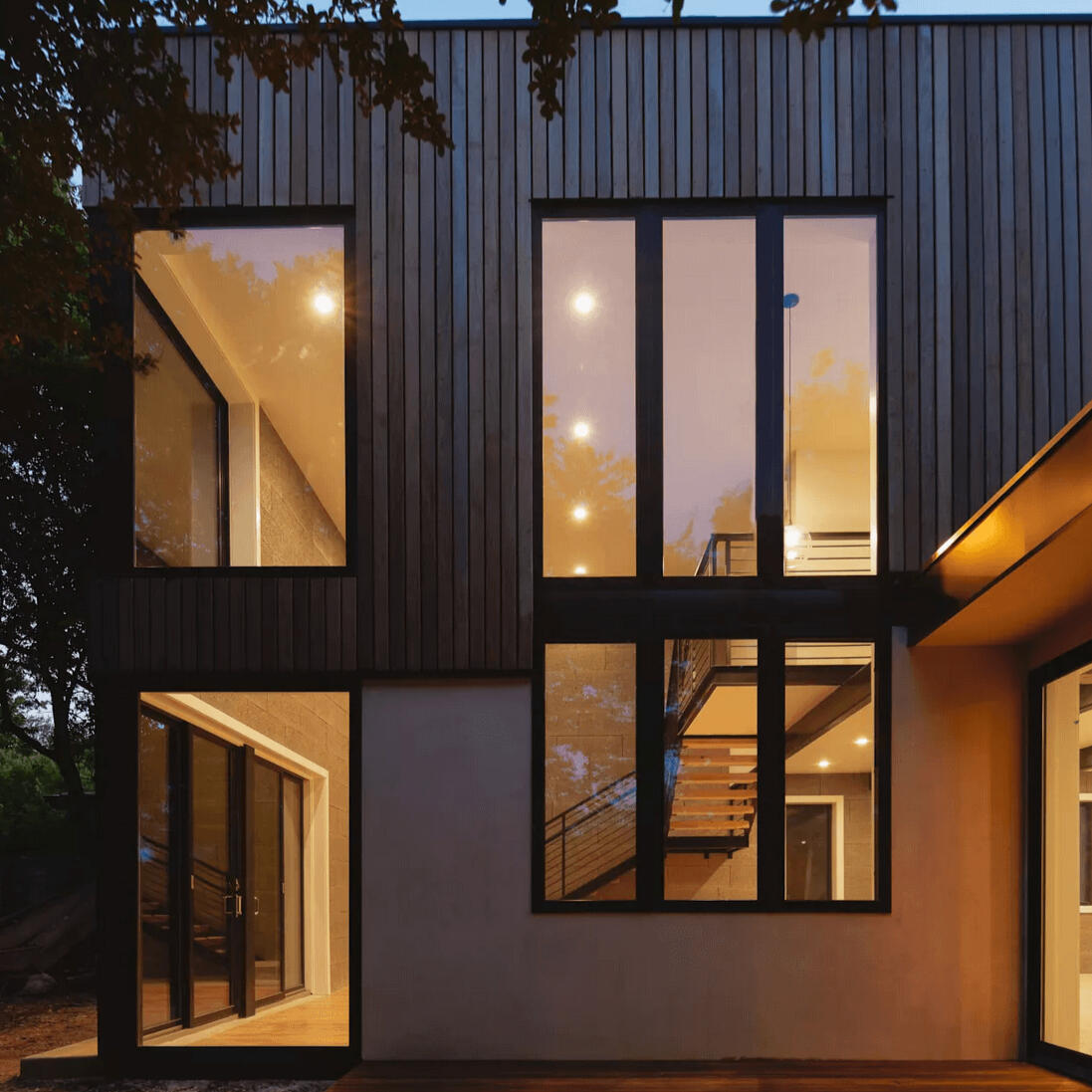
Potential homeowners will comprehend that for energy efficient, zero energy, green design, eco-friendly, passive and low energy homes to be built, the components selected and the build methodology followed has to significantly exceed Australian Standards. The Standard is, after all, a minimum requirement.Homes should be constructed with care, diligence, and attention to detail, utilizing an intelligent build methodology + high performance components such as thermally insulated concrete mass slab and walls, thermally isolated triple glazed windows and a sealed insulated box roof. Homes built to this specification are not adversely affected by unwanted external noises, maintain comfortable year-round room temperatures and negate the need for supplemental cooling or heating.
Modern Durisol Construction
Exposed Durisol Walls Internally
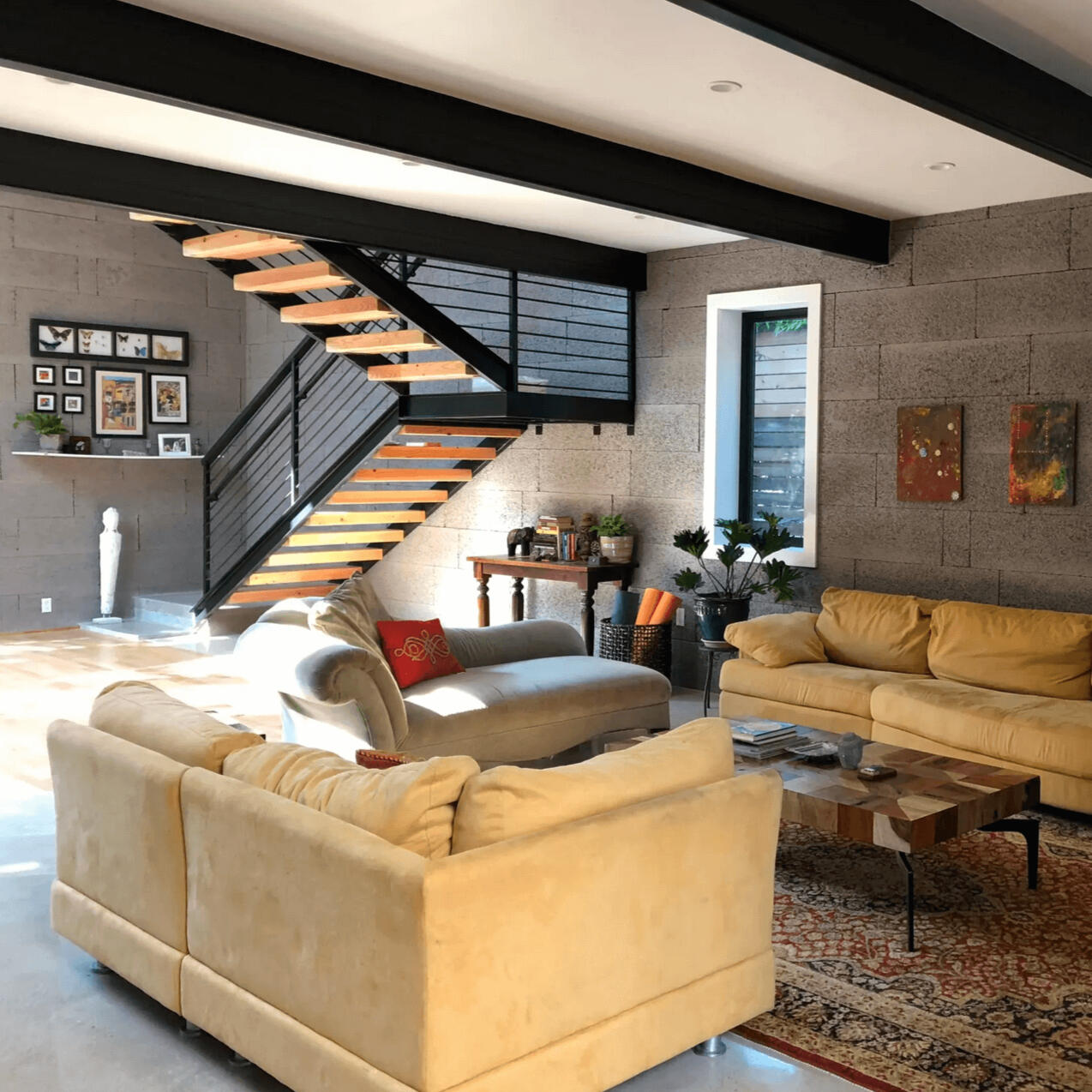
To build better energy efficient, zero energy, green design, eco friendly, passive and low energy homes, technical features, and superior to industry-standard practices are required. The outcome is an unimaginable high comfort level and a standard of living for its occupants second to none, with significantly lower energy consumption and minimal carbon emissions.
A Superior Building Envelope Is Paramount
Key to achieving energy efficient, zero energy, green design, eco friendly, passive and low energy homes is the performance of the external components known as the building envelope. It includes the slab, walls, doors, windows, and roof, working cohesively to protect the occupants against heat transfer and air leakage. The effectiveness of the home's building envelope depends entirely on the suitability of components selected + the build methodology followed + the quality of workmanship employed in the building process. The level of comfort within homes is determined by the building envelope's capacity to reduce the amount of energy required to maintain the desired temperature.
High Performance Components + Intelligent Build Methodology = Effective Building Envelope

Low energy, green homes are desirable homes to live in because the cost of energy consumption has emerged as a critical impost on household budgets. The rising energy costs are due to environmental impacts and supply pressures placed on power & gas companies, which utilise expensive and unsustainable coal-fired and gas-powered plants.Building and living in energy efficient, zero energy, green design, eco friendly, passive, solar passive, low energy homes, improve the quality of life, and substantially reduces the household budget expenditure on power and gas. The satisfaction of knowing a home's contribution to greenhouse gas emissions is minimal is a welcome bonus.With infinitesimal air leakage and heat loss when compared with typical Australian homes, these quieter than standard abodes are far superior to homes built to Australian Standards and deliver to their inhabitants a substantially more comfortable, less costly home to maintain.
Need additional information?
Follow the image link below
And discover more

© 2024 Ultium Pty Ltd T/A Durisol Western Australia. All Rights Reserved
© 2024 Jigamo Pty Ltd T/A Internorm Western Australia. All Rights Reserved